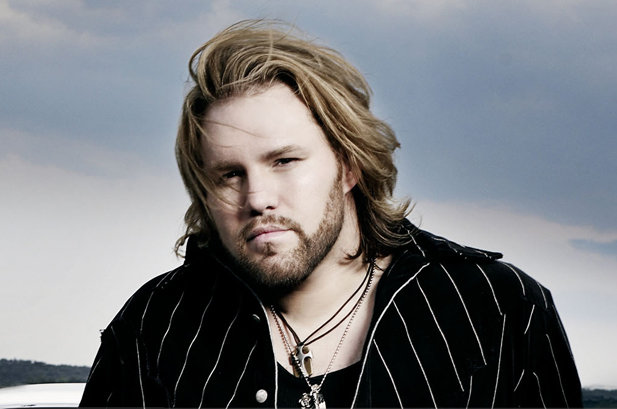
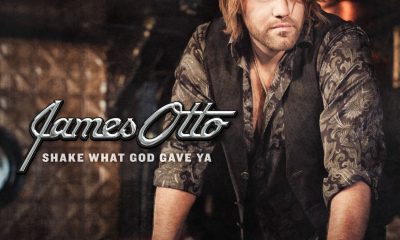
Last week, country singer James Otto unleashed a series of tweets bemoaning music piracy. This morning, those tweets were featured on AOL’s country blog (The Boot) in a brief write-up by blogger Phyllis Stark, who cites Otto’s comments as a “specific example of how [piracy] affects artists and songwriters.”
Trouble is, Otto’s comments offer no specific example of how piracy affects anything at all—just an unsourced number alongside a heaping helping of moral righteousness.
“I’ve known music piracy was rampant but check it out,” Otto writes. “This week I sold 7500 singles (which is pretty good) but 80,000 people stole it. No wonder so many of my friends in the business are losing their jobs. Kinda scary.”
We’d love to check it out, but there’s no way to do so. Unless, that it, Otto and his label have some magic piece of software, hidden from the rest of the industry, that can track how many times a copyrighted work was copied illegally.
Later, in another tweet, he chides people for paying “$5 for a cup of coffee.”
Five bucks? Where you buyin’ your brew, bro?
What Otto states as fact (80,000 people stole his song) is actually an estimate, based on some mathematical model. It doesn’t matter which model, because the number the model reports is irrelevant. 80,000 or 800,000—the truth is that today, because of legal and illegal music delivery channels, there is so much choice, so much ease of access and so much inventory that the vast majority of artists cannot expect to sell tens of thousands of copies of a song in a week. A small handful of extremely relevant “now” artists are capable of pushing those numbers, but there is no way in hell Otto would have sold 87,500 copies of “Groovy Little Summer Song” last week. Otto is a B-list star with a minor radio hit and virtually no national exposure outside of country radio. What in the world would have propelled him to those kinds of sales figures?
Otto’s statement is misleading and disingenuous to his fans, but that’s not the point. The issue here is with the essence of his statement: illegal downloads are killing the music industry and costing people jobs.
It’s not true. And it’s time for artists and labels to stop trying to pin the downfall of the industry on music fans. The business has changed. It’s never going back. There is no end to piracy. No matter how many grandmas and college students are sued, no matter how many PSA ads are aired with the intention of convincing people to be ashamed of their behavior, and no matter how many indignant tweets artists pop out from their iPhones.
What’s killing the industry is its own inability to adapt and rebuild itself around a drastically altered landscape. Hell, Warner Bros.’ big idea for revamping the industry is to split albums up into 6 song EPs? That’s their answer? You’ve got to be kidding me.
Regular people download music illegally because they can, and because they don’t believe it’s wrong. They have no idea how the music industry works, and they don’t care. Even if they did, they would still be pirates.
From a consumer’s standpoint, how does it make sense to spend $15 on an album when everyone around you—your neighbors, your friends, your co-workers—is downloading it for free? These are real people, with real families, and they only have so much disposable income. They’d rather spend that money taking their family out to dinner, or taking their loved one to a movie, or buying bait to go fishing.
And so we come to the crux of Mr. Otto’s problem: consumers don’t want to own his music strongly enough to shell out that $15 for it. They don’t feel compelled to go buy James Otto’s CD. And, as for song downloads, if they were going to spend .99 cents to download a song, they sure wouldn’t spend it on his. They’ll download it for free and not feel even the least bit bad about doing so.
Why don’t they feel bad about breaking international copyright law? Because they weren’t going to buy Otto’s record or song anyway. Sure, they like it OK. They heard it on the radio a few times and it’s nice to chill to while they’re going for a walk down to the Kroger, but if they couldn’t get it for free they wouldn’t care about it. No piracy? Those 7500 singles Otto sold would turn into, what? 10,000? 15,000? Not 80,000. No way.
It’s not because they don’t like Otto or his music. Consumers just have better things to spend their limited resources on, especially in this economy. After all, they can’t buy all of their music—so why would they buy his? How many songs are on an iPod? Thousands? People can’t spend thousands of dollars building their music collection. They don’t have that much money to spend on music.
And so, the industry’s answer to all of this is to basically tell people to “consume within their means.” The industry wants people to only possess the music they can afford to purchase. And you can’t blame ‘em. That’s how it’s worked for years and years.
But that’s over. We’re not talking about a few rouge pirates who just need to be flushed out of the system. We’re talking about a global, cultural shift in the way we as a society view our relationship to music. We will never again be satisfied owning a little shelf full of CDs, or a little digital folder full of files. We’ve gotten a taste of what it’s like to be able to hear what we want, when we want, where we want. And we’re never going back.
If that upsets you, fine. If you think it’s wrong that people don’t care about the songwriters, the publishers and the label folks who put in more hard work than they get paid for, well, that’s fine too. But stop whining about it. And stop trying to play the victim. Copyright law is a stale argument. Society doesn’t think downloading music is wrong. Good luck playing the legality card. There are millions upon millions of people who think you’re crazy, and greedy for doing so.
Think people won’t buy music? They sure do buy Carrie’s music. And they buy Miranda’s music, even though she toiled for years with almost no radio support. She still sold platinum. She was giving people something to buy into. People care about Carrie Underwood and Miranda Lambert and Taylor Swift—not just as producers of music, but as people. And for very different reasons among the three artists. The one consistent thing among them, however, is that they give fans something to be a part of. An image. A movement. A concept. They encourage a shared social experience. And people will pay to be a part of that.
There’s Underwood, who built a loyal following on American Idol. Her fans feel invested in her career. Lambert is the relatable rebel, the bad girl with a sweet side who critics and mainstream fans adore equally. And then there’s Swift, who is almost as much a friend to her fans as she is an icon to them.
What’s James Otto’s image? What movement is he inspiring people to be a part of? How does James Otto help people better understand themselves and where they fit in society?
Hey, you don’t have to do those things. you can be the kind of artist who just cranks out consistently pleasant music. That’s the great thing about this new industry democracy that the internet has unearthed—you can be that guy and still make a living with your music. Twenty years ago? That’s a much tougher task.
But if you want to sell 80,000 singles per week, those are questions you need to ask and issues you need to deal with. And, from a label standpoint, those are the things you need to consider when mapping out your business plan.
See, perhaps the biggest flaw with major label thinking these days is the belief that the label can turn an artist like James Otto into a superstar. They’ve spent way too much money on this guy’s career. He has talent, God yes. He has a place, and his music has an audience. But he’s not a top-tier guy. For whatever reason (and you could debate reasons ’till the sun goes down), he’s just not.
Instead of accepting that fact and working to build a strong, sustainable career that fits what he’s capable of, the label funnels him through the same tube as everyone else and tries to market him in essentially the same way as everyone else.
The little tweaks in the marketing plan don’t matter. The point is that they still think they can do business the same way they used to. Sign an artist. Break that artist. Market that artist. People will buy.
People won’t buy.
So, we come back to piracy. Here’s the way too simple solution—give people music in the cloud. Give them a service that they can buy into, for a fee, that allows them to hear what they want, whenever they want, and via the device of their choosing.
Rhapsody-to-Go was a great idea: $12.99 per month and you get to take whatever music you want with you. Who cares if you actually own the files. The problem? It doesn’t work with iPods. D’oh! Fail.
No iPods? If your streaming music service doesn’t work with iPods, just forget about it. Save yourself millions of dollars and lots of headaches. No one is going to use the Sansa. No one is going to use to Slot Radio player. Do you want to be the uncool kid who doesn’t have the iPod? Microsoft can’t even sell the Zune.
On top of that, if you want to sell music, you need to price it so that the product (whether a streaming service or something else) has more value than free downloads.
Free downloads aren’t free, you know. If you want to download off of BitTorrent, you’ve got to spend time finding valid torrents that don’t have fake files, and then you’ve got to hope there’s a seeder. If you’re on Limewire, you better watch out for viruses and low-quality downloads with skips and scratches.
It takes time, energy and patience to illegally download music.
Don’t you think people would pay $X.99 per month to avoid that? Time is money. Bring all the music together in one marketplace and let people go crazy. They’ll pay for that, if you package it in a way that really works. If, that is, you package it in a way that met their needs, not the industry’s needs.
Until we get there, though, Otto’s right about one thing: It’s a tough go for people in this industry. It’s hard to make a living right now. But we would all do better if more people would get down from their high horses and genuinely look for solutions, rather than just complain about how messed up everything is. People who pirate music aren’t criminals—legally, yes, but not by society’s standards. As an industry, we need to accept that, and find news ways to monetize our creative works.


While pirating may hurt the songwriters, it’s disingenuous for artists to complain too much. Most of their money is made from touring and merchandise sales. In that regard, I think piracy actually helps them. If someone downloads a song or album for free that he wouldn’t pay for and winds up liking it, then he may go see that artist live if the performer is in the area. In that regard, I would argue piracy actually benefits the singers.
@Andrew: I think there’s a lot of truth in that.
Piracy hurts songwriters, but the environment that allowed piracy to flourish has also helped songwriters. I would argue that it’s much easier to make a living as a songwriter than it was 20 years ago. And it seems to me when someone like Otto talks about how piracy hurts “songwriters,” what he’s really talking about is how it hurts a small handful of top-tier songwriters.
It’s insanely difficult (as it always has been) for songwriters not in “the circle” to get major label cuts. Now, however, they have viable alternatives.
None of this is to say that piracy hasn’t been bad, or isn’t bad, for the industry. I just think it’s time to be realistic about it. This idealistic indignation isn’t helping.
Most of their money is made from touring and merchandise sales
Well, that’s true, but it’s true largely because they aren’t making money from selling the music itself any more. And, just as there’s a distinction between what the top stars make from singles and album sales and what a James Otto (for instance) makes from them, there’s a distinction between what the top level stars make from selling merch and what someone at Otto’s level can move. He probably doesn’t have parents shopping online for a James Otto present for their daughter, for instance. And he has fewer venues to play at than he used to, since live venues are closing down all over the country.
Music piracy doesn’t end the careers of the gold and platinum artists, but it puts a serious crimp in the income of acts who once could have made a living selling 50,000 or 100,000 copies of their albums, together with the associated touring and merch income. Some of them compensate by arranging to put out a lot of live material, which will presumably interest the people who take the trouble to come to their shows. A couple compensate by investing heavily in huge varieties of T-shirts, hoping that the fans will want one of each in all sorts of sizes. I’ve worked a bunch of merch tables, and I’ve seen a lot of strategies. And some of them seem to work. But it’s not clear to me how a new artist even gets to that sales level these days to begin with.
Well, that’s true, but it’s true largely because they aren’t making money from selling the music itself any more.
Were they ever, though? Less than 10 years ago, the standard rule of thumb was that a major label artist didn’t break even ’till they sold 500,000 units. It takes an enormous amount of money to do business the way major labels do business. And I wonder how many of those artists who had hits in the 90s (for example) made money from selling their music? Because the handful of major label artists that were able to sell gold (even then) was minuscule.
Artists can sell a few thousand of records and build a more sustainable career than those stars who sold 500,000 albums on a major label but have essentially nothing to show for it.
We exist in a time where Lawrence Lessig’s “free culture” mindset runs rampant and where access to illegal content has never been easier.
With that said, I think that James Otto should face up to two realities: he has not fostered enough brand loyalty to sell these supposed numbers legally to his core audience which is nowhere near the likes of artists consistently circling the top of the charts. Secondly, his brand and his music is nowhere near popular enough to engage the casual consumer who could hoist him to maybe a third of those numbers on a weekly basis. These casual consumers might buy his single (not his album) after a number of radio/video/streaming impressions.
I personally have grown so weary of inconsequential filler songs on major label Nashville releases I’ve lost interest in purchasing complete new album CDs for the most part. Newer albums, like Aussie Harmony James’ “Tailwind” album, that are full of strong tracks have become few and far between. I do like the cost and convenience of buying download singles BUT I find the sound quality limitations of many of these songs to be very off putting. Sometimes I share cool music with radio station DJ’s and they won’t consider commercial 256 Kps MP3 downloads as suitable for airplay no matter how much they like the song.
This leaves me in a quandry of having to choose between springing for a CD full of songs that I may not care for or downloading single songs that sound inferior to the full bitrate CD versions! Combine that with the general inferiority of the sound quality on most Nashville produced CDs these days and I’m left wanting to wash my hands of the whole scene! My adaptation has been to wait and purchase used CDs at low prices so that if they are full of sucky songs I don’t feel too bad about the money I’ve wasted!
I don’t do illegal downloads but I do have friends in Australia, England, and Canada that send me copies of CDs they think I might like, and if I really like the music I’ll track down an original if the price is reasonable. Unfortunately this excludes most Aussie albums which can easily cost $ 30 US to get shipped to The States.
To all the legitimately griping artists I say “Put out better songs, produce them to sound better, and then offer us CD quality sound downloads and see what happens”.
Nice piece, Jim. The question I just asked myself: how low would James Otto have to lower the price of “Groovy Little Summer Song” for me to buy it? He could make it free and I still wouldn’t want it. Hearing it on the radio is free, and I still don’t want to hear it there. I would consider myself lucky if 80,000 people actually wanted it enough to steal it, because that’s an audience — precisely what tons of artists would kill for.
“Me And Your Cigarettes”? I’d pay double for that.
JIm, until the last 10 years or so ago, most major labels had one or two artists selling 100,000 units reliably who they kept around for the cred. (The same way AMC promotes the helll out of Mad Men these days, even though it’s never going to be a big audience hit.) True, the artists would never recoup their advances, but the label didn’t care, kept them around, and gave them another advance with each album. Which made for a sustainable career.
And the bigger indies were totally happy to have artists of that size on their labels; they couldn’t generally manage to get them hit singles, the way the majors sometimes could with their prestige artists, but they could get them the album sales. And at those labels, breaking even happens a lot sooner. And with indie labels folding or consolidating, that’s not an option for as many people these days.
Obviously, I don’t put all of this on the illegal downloads. But I do think that’s one reason why marginal artists at each sales level are being cut much more quickly than they would have been otherwise, and why it will probably be harder for new artists coming along to get the kind of advances that will support them.
“And so, the industry’s answer to all of this is to basically tell people to ‘consume within their means.’ ”
How dare the industry ask the American public to show some restraint, right?
I have such a hard time reading arguments like this because they’re built upon the idea that just because we have the ability to do something means we should; that we’re entitled to everything we want when we want it.
Call me old-fashioned, but my parents taught me to respect the property of others. Now, judging by your review of “Voices”, you probably think that’s a load of crap and that I should learn to think for myself and move into the new morality where you do what feels good for you. But I’m sorry, that sounds like an awful way to live.
One thing I do agree with: there’s no way James Otto would have sold 80k copies of that terrible song through iTunes. But even if he converted 10% of those to paid downloads, that would mean an extra $750 for the songwriters alone last week, money they could use for “taking their family out to dinner, or taking their loved one to a movie, or buying bait to go fishing.”
“How dare the industry ask the American public to show some restraint, right?”
It’s not about whether or not we would be within our rights, or whether or not it would be reasonable, to “ask the American public to show some restraint.” It’s about whether asking that of the American public actually has any positive effect, or just perpetuates the same ways of thinking and our continued dependence on an outdated business model.
That’s really what I’m getting at here—we have to stop thinking about this in terms of right and wrong. That war has already been lost in the hearts and minds of the “American public.” You can ask them to show some restraint, but they won’t. You can try to convince them that pirating music is wrong, but they don’t think it is.
So, we talk about intellectual property, and copyright law, and songwriters, and we just keep missing the point—we have to completely re-shape the way we monetize creative content. Not tweak it. Not adjust it. Not fix it. Burn it down and build something new.
“I have such a hard time reading arguments like this because they’re built upon the idea that just because we have the ability to do something means we should;”
That’s not the foundation of my argument, just what you read into it based on your own preconceptions about this topic. I don’t think it’s a matter of should or shouldn’t—I think it’s a matter or “is.” This “is” the way things are. Are we going to stubbornly cling to ethical ideals that society as a whole doesn’t follow? We know the financials, but the world has changed. And we can’t force those ethics on our consumers. I don’t like that any more than you do, but the bottom line is that music sales aren’t going up—not now, not ever…not as long as we keep trying to sell the product the same way.
“Call me old-fashioned, but my parents taught me to respect the property of others.”
Most people do respect the property of others. But most people don’t see a recording as property. They don’t understand that a CD has minimal cost, that what actually creates the price of a recording is the intellectual property and value of performance. But that’s not the point. The point is, how much money, and how much energy, are we as an industry going to spend trying to teach society this lesson? And how long are we going to allow sales to decline before we realize it’s time to chart a different course?
“Now, judging by your review of “Voices”, you probably think that’s a load of crap and that I should learn to think for myself and move into the new morality where you do what feels good for you. But I’m sorry, that sounds like an awful way to live.”
My review of “Voices” has nothing to do with hedonism, and to equate “thinking for yourself” to “doing what feels good for you” is quite a stretch. For what it’s worth, I don’t think that respecting people’s property is a load of crap.
“One thing I do agree with: there’s no way James Otto would have sold 80k copies of that terrible song through iTunes. But even if he converted 10% of those to paid downloads, that would mean an extra $750 for the songwriters alone last week, money they could use for ‘taking their family out to dinner, or taking their loved one to a movie, or buying bait to go fishing.’”
I’m not going to argue with your premise on this, because you’re right–it sucks for songwriters. But readers should know that your math is incorrect or misrepresented.
At the current statutory mechanical rate of 9.1 cents, 8000 singles would produce $728 (not $750). So, first things first, cut that pie in half, because you’ve got to take out the publisher’s share. That brings us down to $364. Since there are three writers on “Groovy Little Summer Song,” let’s cut that up three ways: $121 per writer. Otto would have received less than that, since he’s no doubt working under a negotiated rate.
Certainly though, as you pointed out, it’s nothing to laugh at.
But it’s preposterous to think that track would have so another 8,000 copies in one week, piracy or no piracy.
It is worthwhile to take a look at the situation from the consumer’s point-of-view. Are they doing their job? What are they spending on all forms of entertainment per year? The 20-year old today is spending far more money than any 20-year old in history. The key issue is how are they spending it. What is their entertainment “mix.” Ultimately, they have to budget. If we want them to spend $850/year, we have to better understand where that money is going. And then work hard to see if we can move that spending “mix” more to our favor.
In the studies we conducted, I was shocked at what young adults are spending each year on concerts. And pleased at how well thought out their budgeting process was – clubs, festivals, smaller shows and the big ticket shows. It is not unusual for a young adult to spend $300-$400 per year on live performances.
We all know what they are spending each year on digital devices, game consoles, cell phones and other forms of digital entertainment that I did not have to budget for when I was 20.
Will this next generation buy recorded music? We might want to flip that question around and ask, what does the product, packaging and pricing need to look like to maximize sales in the here-and-now. Forget about the old days. Should every CD include a DVD? I think so. I really liked how Taylor Swift’s Fearless (Platinum Edition) was packaged with additional songs and a 10-video DVD — and at a great price point. I love the 5 and 6 song EPs I’m seeing from indie artists. I just wish more included a DVD too. I think the reality-tv public thirsts for more behind-the-scenes footage and insight into the artist than ever before.
I saw the movie Titanic in the Target bin for $9.99 a few months ago. Here’s a movie that cost over $200 million to make. The DVD contains behind-the-scenes footage and commentaries and other special features. As I held it in my hand I thought “Isn’t this what my artists are competing against to some degree?” From the consumer’s standpoint. Not the artist’s standpoint. How is today’s music product/package measuring up to this? In most cases I’m paying around $12-$14 for a product with no liner notes, no lyrics, no videos, no commentary, no “making of”… most packaged CDs today are not competitive product-wise. This has nothing to do with the music.
I watch closely how kids buy merch at shows and how they buy in stores. I may be a crazy contrarian, but i don’t think physical is dead. And I’ve been buidling ecommerce companies since 1994, so it’s not like I’m adverse to buying digitally. I’m just a sucker for great products, great brands and great packaging –and i think the kids today are too. Today I was watching youngsters buy vinyl – well-packaged vinyl. I just laughed.
S.K., who is the “we” that conducted the studies?
I disagree about every CD offering a DVD. Physical video is headed the way of physical music—to the cloud.
And, aside from that, the DVD as a selling point assumes consumers have an interest in dedicating additional time to an artist or project. The DVD comes off as gimmicky to me, because while it adds something to the package, I don’t see how it adds value for the consumer.
On the other hand, I agree with you about product packaging in general. I’ve been seeing so many releases of late that are little more than a CD in a slip-case.
Selling a CD in that kind of packaging reduces the product to a storage unit of music, which is exactly the opposite of what labels and artists should be selling. Consumers don’t need the music; chances are they already own it. (Whether by legal or illegal means.) You’ve got to sell them the experience—give them something they can’t download.
I think limited edition releases and tour-specific releases that are available only at shows are a very good idea.
All in all, a brilliant comment and I thank you for sharing your thoughts with our readers!
great article … and while you covered a broad range of elements of an even broader discussion I’m glad you touched on one of the fundamental flaws that those calculating the overall impacts of piracy have on the industry — they automatically equate an ‘illegal’ download with lost revenue, when in many cases that just is not the case. I’ve downloaded a number of things that I never would have spent money on (those I have enjoyed I have purchased, often finding new and exciting artists, those I didn’t I was at least able to give them a chance). Has piracy changed the landscape of the industry as a whole – without question… has it had a direct impact on revenue streams – of course… but using fluff numbers to whine and moan (and attack the consuming fans) does nothing but fan those flames in the Ring of Fire….